CSI Semiconductor Index vs. STAR 50 Semi: The Style Divergence Indices

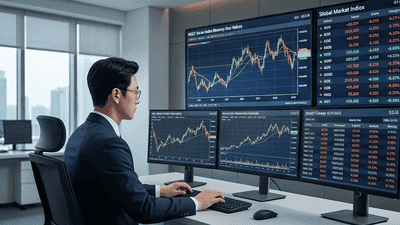
CSI Semiconductor Index vs. STAR 50 Semi: The Style Divergence

Two portfolios can carry the semiconductor label and still express very different investment ideas. One may concentrate on the businesses that supply fabrication plants with equipment and materials. Another may lean toward chip designers, manufacturers, and technology companies whose valuations depend on expectations for future growth. When their returns diverge, the explanation often lies less in competing views of the semiconductor industry than in the exposures built into their construction. Read More

• Daniel Carter

Taiwan Semiconductor Index vs. SOX Correlation: The Decoupling Signal Indices

Taiwan Semiconductor Index vs. SOX Correlation: The Decoupling Signal

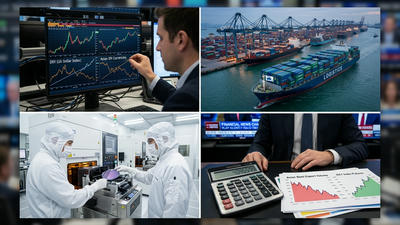
Two semiconductor indices can follow the same global growth story and still tell different market stories. Taiwan’s semiconductor equities reflect the economics of manufacturing, design, packaging, and testing within a deeply connected production ecosystem. The Philadelphia Semiconductor Sector Index, better known as SOX, captures a different combination of semiconductor businesses through U.S.-listed securities. Their relationship offers a useful window into how investors price the chip cycle. Read More

• Matthew Collins
Credit Impulse and Semi CapEx: The 6-Month Lead Macro Linkages

Credit Impulse and Semi CapEx: The 6-Month Lead

Semiconductor capital expenditure is one of the clearest expressions of confidence in the future of the technology industry. When chip manufacturers increase spending on fabs, equipment, advanced packaging, and production capacity, they are effectively making a multi-year commitment to expected demand. When they cut capital expenditure, the decision often reflects concerns about inventories, pricing, utilization, financing conditions, or the broader economic cycle. Read More

• Daniel Walker
Precursor Demand in ALD and CVD: The Korean Supplier Dominance Materials

Precursor Demand in ALD and CVD: The Korean Supplier Dominance

A semiconductor’s most important materials are not always visible in the finished device. Some arrive at the factory inside specialized containers, enter a deposition chamber as vapor, and disappear into films only a few nanometers thick. These precursors help form the insulating layers, electrodes, barriers, and other structures that allow modern chips to operate. Read More

• Henry Cooper
Wet Chemicals G5 Purity: The Domestic Qualification Breakthrough Materials

Wet Chemicals G5 Purity: The Domestic Qualification Breakthrough

A semiconductor fabrication plant can install advanced equipment, secure high-quality silicon wafers, and develop sophisticated process recipes, yet still lose performance to contamination carried by an ordinary-looking liquid. Sulfuric acid, hydrogen peroxide, hydrofluoric acid, and ammonia solutions appear unremarkable beside a lithography scanner. Inside the fab, however, their cleanliness can influence whether a carefully engineered surface survives the next manufacturing step. Read More

• Ethan Parker

Thematic ETFs

View all
Memory Weight in AI Compute Indices: The Underweight Correction

Memory Weight in AI Compute Indices: The Underweight Correction

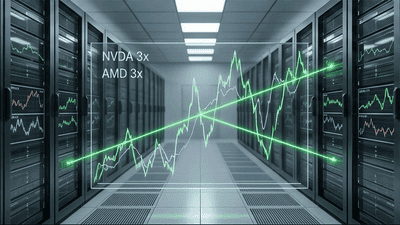
Artificial intelligence investment has created a new generation of thematic indexes designed to capture the companies benefiting from the expansion of computing infrastructure. These indexes often emphasize GPUs, accelerators, networking, cloud platforms, data centers, semiconductor equipment, and power infrastructure. Memory is usually present, but its representation can vary substantially. In some AI compute indexes, memory companies occupy a relatively small position compared with their economic importance to the underlying systems.

2026-10-25

Advanced Packaging

View all
The Three-Headed Race in Advanced Packaging: TSMC, Intel, and ASE

The Three-Headed Race in Advanced Packaging: TSMC, Intel, and ASE

For years, chip conversations revolved around transistor nodes and wafer fabs. Today, the more interesting battles are often happening a few millimeters above the silicon, in the world of advanced packaging. As AI, high‑performance computing, and high‑bandwidth memory redefine what a “chip” looks like, three names stand out in the packaging race: TSMC, Intel, and ASE. Each comes from a different starting point, with different strengths and weaknesses, and together they’re reshaping how heterogeneous integration will be done for the next decade.

2026-08-05

Materials

View all
CMP Slurry Advances: Dinglong’s Cerium Oxide and TSV Polishing Wins

CMP Slurry Advances: Dinglong’s Cerium Oxide and TSV Polishing Wins

The semiconductor supply chain has a habit of hiding its most consequential dependencies behind its least glamorous materials. Advanced lithography attracts headlines. AI accelerators attract capital. Yet before a chip can become either a technological breakthrough or a commercial success, it needs a wafer—and most mainstream silicon wafer production depends on growing a single crystal inside a quartz crucible.

2026-10-20

Indices

View all
CSI Semiconductor Index vs. STAR 50 Semi: The Style Divergence

CSI Semiconductor Index vs. STAR 50 Semi: The Style Divergence

Two portfolios can carry the semiconductor label and still express very different investment ideas. One may concentrate on the businesses that supply fabrication plants with equipment and materials. Another may lean toward chip designers, manufacturers, and technology companies whose valuations depend on expectations for future growth. When their returns diverge, the explanation often lies less in competing views of the semiconductor industry than in the exposures built into their construction.

2026-10-23

Macro Linkages

View all
DXY and Asian Semiconductor Exports: The Seesaw Effect

DXY and Asian Semiconductor Exports: The Seesaw Effect

The semiconductor industry in Asia sits at the intersection of two powerful forces: global technology demand and global financial conditions. While chipmakers, equipment suppliers, and electronics manufacturers are often analyzed through orders, inventories, utilization rates, and capital expenditure, currency movements can quietly reshape the economics underneath the entire export chain. Among the most influential variables is the U.S. Dollar Index, or DXY.

2026-10-19

ETFs

View all
DRAM ETF’s 124% Post-Launch Surge: The Thematic ETF Phenomenon

DRAM ETF’s 124% Post-Launch Surge: The Thematic ETF Phenomenon

A hypothetical 124% surge in a DRAM-focused ETF sounds extraordinary, but it also provides a useful framework for understanding one of the most powerful forces in semiconductor investing: the difference between a structural change in the memory cycle and the financial market's attempt to price that change in advance. A move of this magnitude would not simply represent enthusiasm for a group of memory manufacturers. It would suggest that investors were rapidly reassessing earnings power, supply discipline, pricing conditions, and the strategic importance of DRAM in artificial intelligence infrastructure.

2026-10-16